
PLAYING TO HEAL: Theories, Research, and Interventional Practices in Hospital Pediatrics
Keywords:
Play, HospitalizationSynopsis
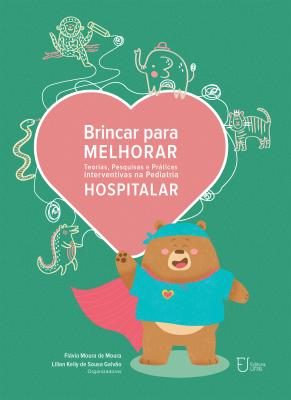
The book Brincar para Melhorar: Theories, Research, and Interventional Practices in Hospital Pediatrics brings together and systematizes academic productions developed within the scope of the Brincar para Melhorar Extension Project, affiliated with the Federal University of Paraíba (UFPB), and carried out in the pediatric wards of the Napoleão Laureano Hospital in João Pessoa, Paraíba, Brazil. The volume emerges from the integration of teaching, research, and extension activities, bringing together formative and investigative experiences of undergraduate students, scientific initiation scholarship holders, and authors of undergraduate theses, all committed to understanding and re-signifying the role of play in the hospital context.
The book also includes contributions from current and former students of the organizers who, at different stages of their academic trajectories, were engaged in playful and interventional activities with hospitalized children and adolescents. The diversity of perspectives and experiences presented highlights the formative potential of the project and its social impact, both on the human and professional development of the students involved and on the promotion of care and development of the children and adolescents assisted. Conducted in a philanthropic hospital that is a regional reference in pediatric oncology, play is addressed as a powerful strategy for the humanization of care, fostering emotional expression, coping with hospitalization, and the continuity of child development, even in contexts of illness and prolonged hospitalization.
The book is organized into three complementary sections. Part I, of a theoretical nature, comprises twelve chapters that discuss pediatric hospitalization through the dialogue between education, health, and playfulness, addressing topics such as childhood cancer, the emotional and cognitive impacts of hospitalization, the hospital experience of children with Autism Spectrum Disorder, the training of hospital psychopedagogists, play in the hospital environment, the use of screens, hospital playrooms, playfulness and affect, family dynamics, parental exhaustion, and curricular adaptation. Part II presents six empirical and interventional studies that examine playful practices, perceptions of children and caregivers, child engagement, the use of digital technologies, and emotional education strategies in pediatric oncology. Finally, Part III presents educational products developed within the extension project, offering accessible materials that expand the reach of extension activities.
More than a record of extension-based experiences, Brincar para Melhorar constitutes a space for training, reflection, and inspiration for students, professionals, and researchers interested in the interface between play, health, and education, reaffirming play as a fundamental language of care and human development in hospital contexts.
Downloads
Download data is not yet available.
Downloads
Published
September 18, 2026
Categories
Copyright (c) 2026 Editora UFPB
Details about this monograph
ISBN-13 (15)
978-65-5942-337-8
